A documented chronology of corporate failures, public acknowledgements, apologies and admissions of responsibility
Updated 26 October 2026 | Historical record and additional sources
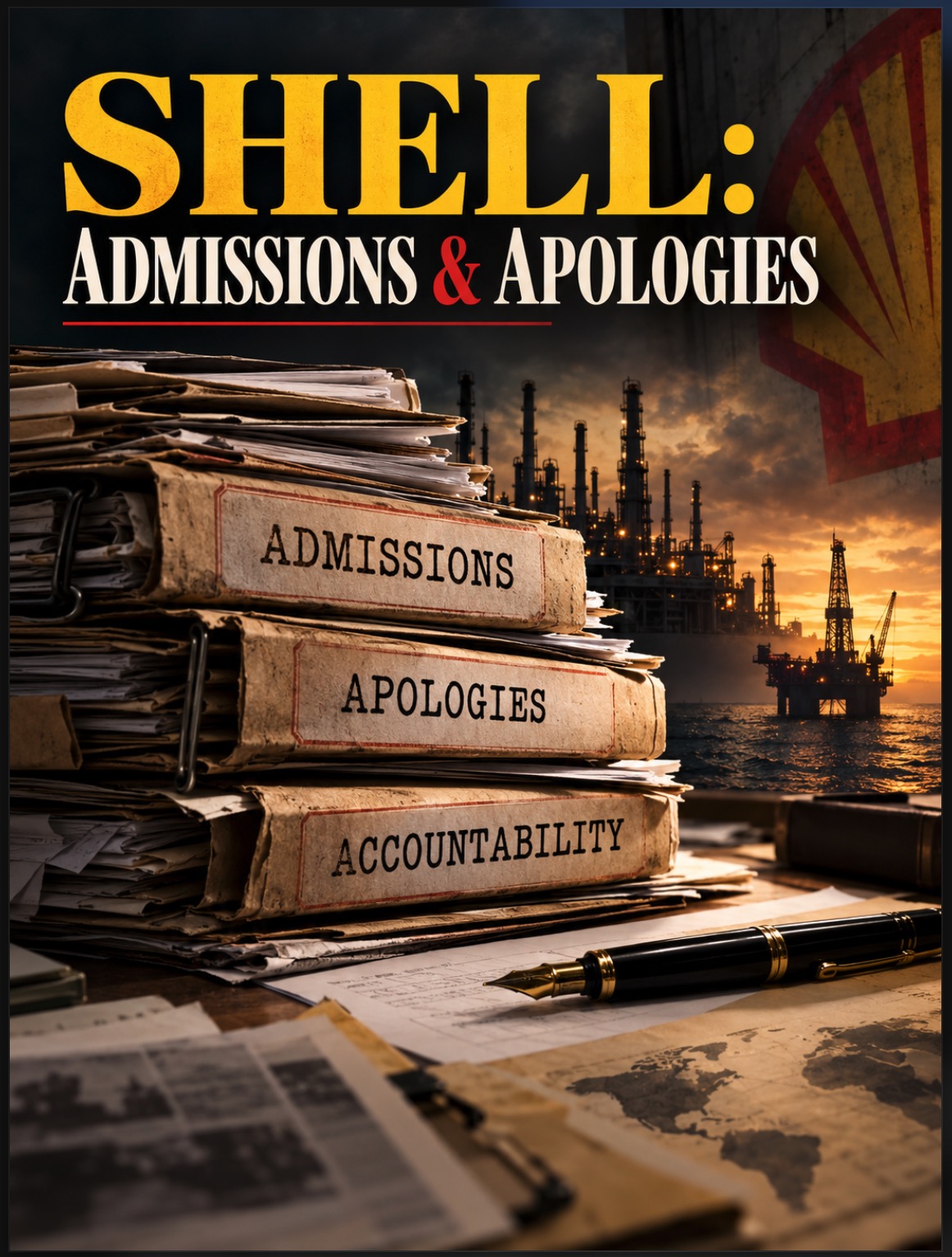
The history of Royal Dutch Shell, now Shell plc, includes a substantial record of occasions when the company or its executives acknowledged serious mistakes, admitted failures, apologised for corporate conduct or accepted responsibility for events with significant consequences.
These admissions concern matters ranging from the misstatement of billions of barrels of oil and gas reserves to failures of offshore safety, environmental damage, bribery, project mismanagement and inadequate communication with affected communities.read more
The Sakhalin Papers LXXXIX: The Certificate That Never Came — How US Sanctions Forced DNV GL Out of Nord Stream 2
On 4 January 2021, one of the world’s leading independent technical assurance companies announced that it was withdrawing from Nord Stream 2. Norway-based DNV GL had been engaged to verify the pipeline’s safety and technical integrity. New American sanctions legislation meant it could no longer complete that work or issue the intended certificate. Yet a subsequent Danish government announcement reveals an important qualification: by October 2021, one of the pipeline’s two lines had satisfied Denmark’s certification-related conditions. The authenticated corporate disclosures, US legislation, Danish regulatory records and German judicial proceedings reveal how Nord Stream 2 encountered successive obstacles even after physical construction was completed.
Archive reference: SLF-2007-099 Publication date: 26 October 2026 Collection: The Sakhalin Papers — Shell, Gazprom and Russia Previous instalment: SLF-2007-098, The Sakhalin Papers LXXXVIII, 25 October 2026
Principal sources: DNV GL’s statements reported by S&P Global and EUobserver on 4–5 January 2021; the US National Defense Authorization Act enacted on 1 January 2021; Danish Energy Agency decisions dated 30 October 2019, 1 October 2020 and 4 October 2021; Nord Stream 2’s construction records; the Düsseldorf Higher Regional Court’s decision of 25 August 2021; German Federal Network Agency records; Shell’s authenticated April 2017 financing announcement; and Shell’s financial disclosures filed with the US Securities and Exchange Commission.read more
The Sakhalin Papers LXXXVIII: The Thirty-Day Exit — Washington’s October 2020 Sanctions Ultimatum and the Companies Caught Between Two Legal Systems
On 20 October 2020, the United States gave companies supporting Nord Stream 2 a sharply defined choice: end certain activities within 30 days or face potential sanctions. The warning extended to businesses supplying equipment, facilities and services to the vessels needed to complete the Russian gas pipeline. An examination of the original Federal Register notice, Shell’s financial disclosures, German parliamentary records and contemporaneous reporting reveals how Washington used an expansive interpretation of existing legislation to intensify pressure on a project already facing serious regulatory and political difficulties.
Archive reference: SLF-2007-098 Publication date: 25 October 2026 Collection: The Sakhalin Papers — Shell, Gazprom and Russia Previous instalment: SLF-2007-097, The Sakhalin Papers LXXXVII, 24 October 2026 Principal sources: US Department of State Public Notice 11236; Federal Register, 5 November 2020; Protecting Europe’s Energy Security Act of 2019; German Bundestag parliamentary records; European External Action Service statements; Shell’s authenticated April 2017 financing announcement; Shell’s 2022 Annual Report filed with the US Securities and Exchange Commission; contemporary S&P Global and Reuters reporting; and subsequent US government sanctions records.read more
Shell has not stopped believing in the energy transition. It simply believes the transition should happen somewhere else, to someone else, and ideally on someone else’s balance sheet.
On Thursday 22 October 2026, Shell achieved something few multinationals ever manage: it was the future of energy in Beijing, the past of energy in Bavaria and the present of energy in the North Sea — all before the tea trolley came round.
A satirical reading of the oil giant’s busiest day of transition.
Thursday: a day of extraordinary transition
In the morning, China Daily published a glowing account of Shell’s plan to deepen its roots in China’s energy transition, complete with an upgraded clean-energy research centre at Tsinghua University.read more
China gets the promises, Germany gets the insolvency proceedings, and Shell gets to explain why both developments are entirely consistent with its energy-transition strategy.
25 October 2026
Shell has discovered an exciting new frontier in the global energy transition.
China.
A country where electric vehicles are booming, renewable-energy technologies are advancing rapidly, and international energy companies are understandably eager to participate.
On 22 October 2026, China Daily published an upbeat account of Shell’s plans to deepen its involvement in China’s energy transformation.
There were discussions of innovation, partnerships, cleaner technologies, charging infrastructure and a more sustainable future.read more
How a German clean-energy champion became an expensive casualty of Shell’s changing priorities — while the oil giant continued pursuing LNG growth and shareholder returns.
24 October 2026
There are corporate embarrassments. There are expensive strategic miscalculations. And then there is Shell’s remarkable ability to make a much-celebrated clean-energy investment disappear from its portfolio just before the insolvency headlines arrive.
In 2019, Sonnen represented the future.
In August 2026, Sonnen represented an asset disposal.
On 22 October 2026, Sonnen represented an insolvency filing.
Welcome to Shell’s energy transition, where yesterday’s pioneering technology can become tomorrow’s discontinued business strategy, apparently without disturbing the oil and gas growth projections.
The immediate news is dramatic.
German battery-storage pioneer Sonnen GmbH, once a flagship investment in Shell’s ambitions beyond fossil fuels, has filed for insolvency barely two months after Shell sold the business to investment vehicle Tiven.read more
The Sakhalin Papers LXXXVII: The Port Under Threat — Washington’s Warning of Crushing Sanctions Against a German Harbour
On 5 August 2020, three American senators sent an extraordinary letter to the operators of Mukran Port on Germany’s Baltic coast. The warning extended beyond the port company to its directors, shareholders and employees. The senators threatened devastating financial consequences unless the port stopped supporting Nord Stream 2. The original correspondence, American sanctions legislation, German parliamentary records and contemporaneous reporting reveal an important distinction: the threat was genuine, but some of the powers invoked had not yet been enacted into law.
Archive reference: SLF-2007-097 Publication date: 24 October 2026 Collection: The Sakhalin Papers — Shell, Gazprom and Russia Previous instalment: SLF-2007-096, The Sakhalin Papers LXXXVI, 23 October 2026 Principal sources: Original letter dated 5 August 2020 from US Senators Ted Cruz, Tom Cotton and Ron Johnson; Protecting Europe’s Energy Security Act of 2019; CAATSA Section 232; US Department of State sanctions guidance; Shell’s authenticated April 2017 financing announcement; contemporaneous Associated Press, Reuters and German reporting; German Bundestag parliamentary records; the German government’s response of October 2020; subsequent US sanctions announcements; and European judicial records concerning the separate regulatory dispute. Evidence classification: Authenticated correspondence, enacted legislation, official government records, corporate disclosures, contemporaneous journalism, judicial context and separately identified editorial commentary.read more
The oil giants have apparently escaped a $12 billion claim because Kazakhstan was too late bringing it. But the wider Kashagan dispute is far from settled, and the embarrassing questions about cost overruns, alleged corruption, environmental damage and corporate accountability are not going away.
24 October 2026
There are moments when the international oil industry must struggle to contain its excitement.
A discovery of billions of barrels of crude oil? Excellent.
A spectacular dividend announcement? Even better.
But a tribunal reportedly disposing of $12 billion in disputed claims because the complainant missed a legal deadline?
Break out the champagne. Preferably something expensive enough to qualify as a recoverable project cost.
According to Zamin’s report of 23 October 2026, based on Bloomberg reporting, an international arbitration tribunal has rejected approximately $12 billion of Kazakhstan’s claims concerning disputed expenditure at the gigantic Kashagan oilfield in the Caspian Sea.read more
Lambeth Council is asking Shell to help fund measures to protect residents from climate change, using its official communications to take the demand directly to the energy company’s doorstep.
The campaign includes a video featuring deputy council leader Ciara Alleyne outside Shell Centre on London’s South Bank. According to The Telegraph, she apparently attempted to obtain a meeting by entering the headquarters but was unsuccessful.
“Can you believe they wouldn’t even let us in?” she says in the video.read more
The Sakhalin Papers LXXXVI: The Grandfathering Gamble — How Washington Changed the Rules for Nord Stream 2’s European Financiers
On 15 July 2020, the United States removed a crucial protection previously afforded to financing agreements signed before August 2017. Shell and four European energy companies had entered their Nord Stream 2 agreements in April 2017. The original American guidance had appeared to place those agreements outside the intended sanctions regime. Three years later, Washington changed its approach. The authenticated US government notice, Shell’s financial disclosures, Uniper’s contemporary warnings and a revealing statement from Wintershall Dea show how a major international financing arrangement became entangled in an escalating dispute between Washington and Europe.
Archive reference: SLF-2007-096 Publication date: 23 October 2026 Collection: The Sakhalin Papers — Shell, Gazprom and Russia Previous instalment: SLF-2007-095, The Sakhalin Papers LXXXV, 22 October 2026 Principal sources: Royal Dutch Shell’s April 2017 financing announcement; the Countering America’s Adversaries Through Sanctions Act of 2017; US Department of State guidance effective 15 July 2020 and published in the Federal Register on 23 July 2020; Uniper’s 2020 Half-Year Interim Report; Wintershall Dea’s 2020 Annual Report; Shell’s 2022 financial disclosures; contemporaneous Reuters reporting; the European External Action Service’s statement of 17 July 2020; and the European General Court’s judgment of 27 November 2024.read more
Shell is preparing further exploration work in Kazakhstan, with seismic surveys intended to help assess whether a prospective block warrants deep drilling.
Public company and government information provides a foundation for the development highlighted in Upstream’s report, “Shell eyes major seismic push and deep well in Kazakhstan.” The important distinction is that exploration preparations do not establish a discovery or a commitment to commercial production.read more
Infineum, the UK-based specialty chemicals business jointly owned by Shell and ExxonMobil, is exploring a sale potentially worth $8 billion, according to a Financial Times report summarised by Reuters.
The report raises the possibility of a significant ownership change at a business that brought together the two oil majors’ additives operations more than a quarter of a century ago.
But the qualification matters: this is a reported exploration of a sale, rather than an announced agreement. Reuters explicitly said it could not immediately verify the FT’s reporting, which cited people familiar with the matter. Reuters report, reproduced by MarketScreener.read more
The Sakhalin Papers LXXXV: The Warning Already in Print — Uniper’s August 2020 Loan Alarm and the Road to Shell’s Billion-Dollar Write-Down
Six years ago, RoyalDutchShellPlc.com published a Reuters warning about the possibility of financial losses on Nord Stream 2. Newly examined corporate reports show that one of Shell’s European financing partners had formally identified the risk even earlier. By 2022, both companies had written down substantial loans. The documentary question is not whether the warning existed, but what it established at the time.
Archive reference: SLF-2007-095 Publication date: 22 October 2026 Collection: The Sakhalin Papers — Shell, Gazprom and Russia Previous instalment: SLF-2007-094, The Sakhalin Papers LXXXIV, 21 October 2026 Principal sources: Shell corporate financing announcements and financial disclosures; Uniper’s 2019 Annual Report and 2020 Half-Year Interim Report; OMV’s July 2020 financial report; Reuters reporting published on 11 August 2020; official United States sanctions guidance; the Düsseldorf Higher Regional Court’s judgment of 25 August 2021; and Fortum’s March 2022 corporate announcement. Evidence classification: Authenticated corporate records, contemporaneous journalism, official government guidance, judicial findings and separately identified editorial commentary.read more
The renewed approval is a commercial breakthrough for Shell-backed Adura. The official decision, however, acknowledges significant greenhouse-gas effects and limits to the project’s benefits for consumers.
By John Donovan — 21 October 2026
The Jackdaw gas project has received renewed approval, allowing a development previously caught by a successful legal challenge to proceed.
For Shell and its joint-venture partner Equinor, the decision removes an important regulatory obstacle. For the government, it supports the argument that domestic gas production has a continuing role during the transition towards lower-carbon energy.read more
The Sakhalin Papers LXXXIV: The Foreseeability Test — What Shell and Its Partners Knew Before the Nord Stream 2 Investment Was Written Off
Shell’s own records establish that its final Nord Stream 2 loan instalments were made in the second quarter of 2020. By then, European legislation had changed, the project was facing legal challenges, American sanctions had disrupted construction and Germany’s energy regulator was deciding whether the pipeline qualified for an exemption. A subsequent European court judgment raises an important question: how much of this risk was foreseeable?
Archive reference: SLF-2007-094 Publication date: 21 October 2026 Collection: The Sakhalin Papers — Shell, Gazprom and Russia Previous instalment: SLF-2007-093, The Sakhalin Papers LXXXIII, 20 October 2026 Principal sources: Shell’s 24 April 2017 financing announcement; Shell’s published 2022 financial results; European Parliament proceedings; European Commission and Council records; the German Federal Network Agency’s May 2020 decision; the EU General Court’s November 2024 judgment; Allseas’ December 2019 statement; and contemporaneous Reuters reporting. Evidence classification: Authenticated corporate disclosures, official legislative and regulatory records, judicial findings, contemporaneous journalism and separately identified editorial analysis.read more
Editorial illustration accompanying a review of Shell-related U.S. and Australian court records.
21 October 2026. This is a dated selection based on the primary records identified below. U.S. docket reports were retrieved on 20–21 October; Australian decisions are reported at their stated dates. Unverified leads are explicitly labelled and attributed; unchecked later proceedings are identified. Neither is used to support a firm current-status claim.
A review of three PACER exports changes the picture in an earlier U.S. court-docket draft. Some cases have been dismissed. Others continue, but Shell has left the case, appears only as a parent company or creditor, or participates in a coordinated proceeding already represented elsewhere in the results. A missing closing date cannot answer whether a claim against Shell remains pending.read more
Sir Henri Deterding, the controversial and outspoken founder of Royal Dutch Shell, now haunts the website. Wise to all the knowledge of Shell, and its shellanigans, he delivers informative and satirical insight to anything about Shell. He's a grumpy old sod, so you'll have to excuse his bluntness.
Click the big chat-bubble (bottom-right of the website)to ask Sir Henri a question. Enjoy!
SHELL EXECUTIVES AT THE CENTER OF A SCHEME TO STEAL $1.3 BILLION FROM NIGERIA’S PEOPLE
SHELL ADMITS DEALING WITH NIGERIAN MONEY LAUNDERER – BBC NEWS
SHELL, ENI AND NIGERIAN OFFICIALS IN OPL 245 CORRUPTION SCANDAL
INVESTIGATION OF OPL 245 NIGERIAN OIL CORRUPTION SCANDAL
DUTCH EARTHQUAKES CAUSED BY SHELL/EXXON
SHELL KILLS FOR OIL IN NIGERIA
SHELL LIED ABOUT CLEANING UP OIL IN NIGER DELTA
SHELL SPIES INFILTRATED NIGERIAN GOVERNMENT
LEGO DROPS SHELL OVER GREENPEACE OIL SPILL VIDEO
SHELL ARCTIC DRILLING ACCIDENTS
SHELL KNEW ABOUT CLIMATE CHANGE DECADES AGO
ROYAL DUTCH SHELL FOUNDER SIR HENRI DETERDING, NAZI FINANCIER
JOHN DONOVAN PROMOTIONAL GAMES FOR SHELL AND OTHER CLIENTS
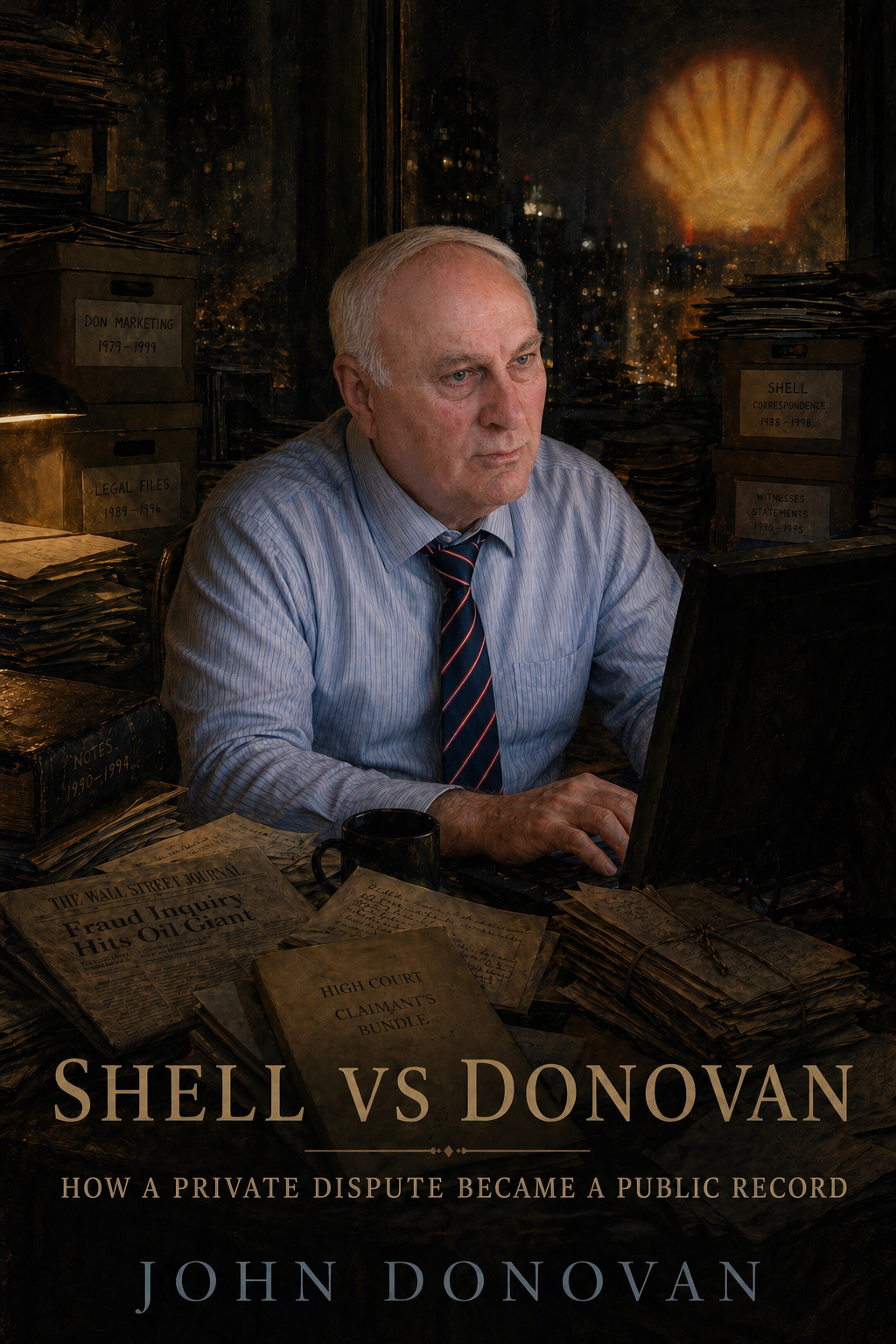
Listen and read proof in audio and transcript form of Shell CEO Ben van Beurden’s cover-up tactics in the OPL 245 Nigerian corruption scandal. The instruction given by him in the covertly recorded call to CFO Simon Henry was at odds with Shell’s claimed core business principles. Cover-up and obstruction, instead of transparency and integrity, says Shell critic John Donovan
I ordered shell energy broadband on nov 2. I was promised connection the following week. They initiated the direct debit. I called the following week and was told router would arrive on 13 and service would go live on 17. No further email or communication until 20 when I was told service would start on 30th. Spent 10 minutes waiting on phone line and spoke to a polite assistant who was absolutely useless in solving my problem. Avoid this unprofessional and chaotic… Read more
Shell Energy Broadband Service is Appalling
The worst ever
I used shell broadband. It was by far the worst broadband provider ever! The internet did not work most days. I had their super fast broadband and it dropped out constantly. Watching a movie was awful with the constant buffering. Customer support was super slow. Now their going to charge me for the useless router which I have sent back.
Date of experience: 21 November 2023
By far the worst broadband provider ever!
The worst ever
I used shell broadband. It was by far the worst broadband provider ever! The internet did not work most days. I had their super fast broadband and it dropped out constantly. Watching a movie was awful with the constant buffering. Customer support was super slow. Now their going to charge me for the useless router which I have sent back.
Date of experience: 21 November 2023
By far the worst broadband provider ever!
30 November 2023: Posted by John Donovan
The content below is sourced from current verifiable customer reviews of Shell Energy published on Trustpilot.
Extremely slow broadband for 10 months, not fixed.I have had slow broadband well below the guaranteed speed for 10 months and Shell Energy have not been able to fix it.They have tried sending about 4 or 5 engineers but have not fixed the problem.Gurps, who I have been dealing with most recently, has been friendly and polite, alth… Read more
Extremely Slow Shell Broadband
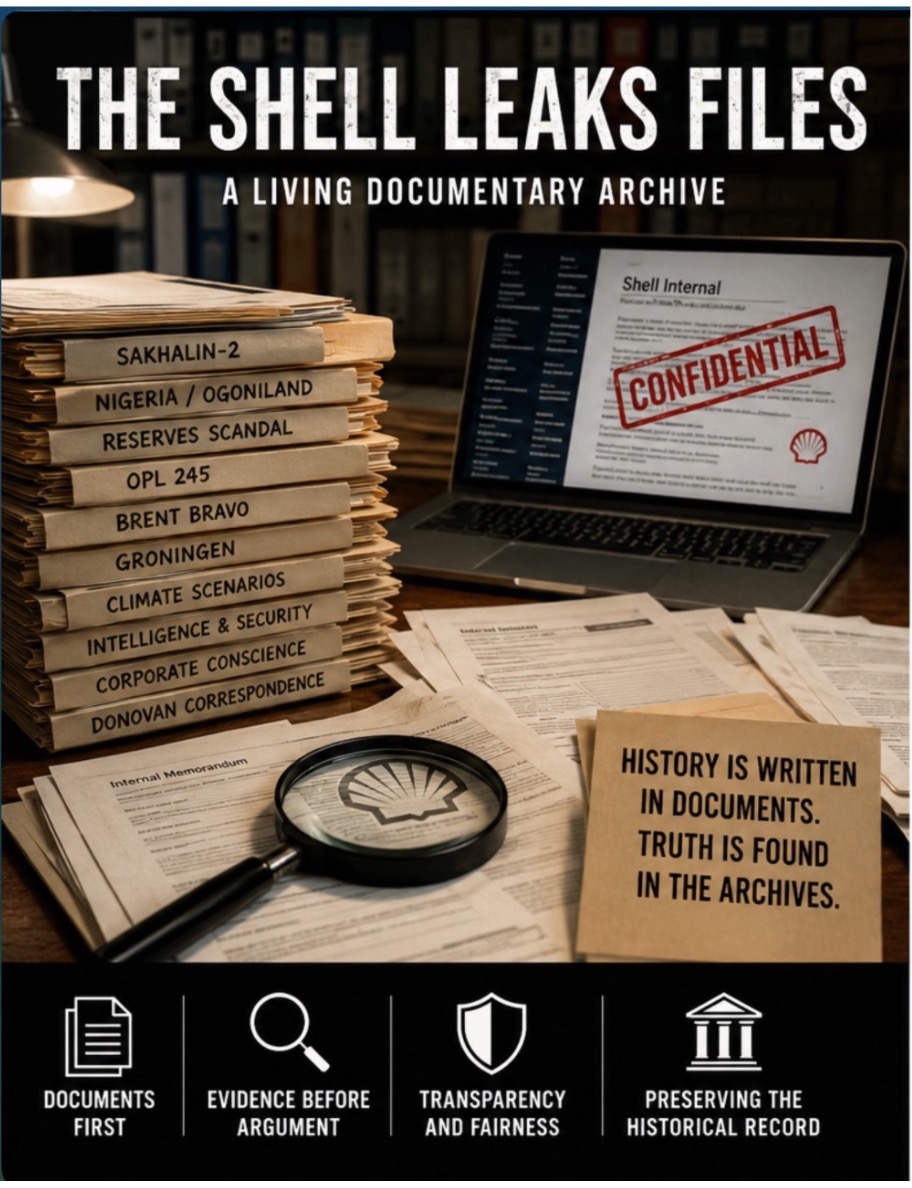
OVER 500 EXTERNAL PUBLICATIONS CITING OUR SHELL WEBSITES
See our link list of over 500 articles by the FT, Wall Street Journal, Reuters, Bloomberg, Forbes, Dow Jones Newswires, New York Times, CNBC etc, plus UK House of Commons Select Committee Hansard records, information on U.S. Securities & Exchange Commission websiteetc. all containing references to our Shell focussed websites, or our website founders Alfred and John Donovan. Includes TV documentary features in English and German, newspaper and magazine articles, radio interviews, newsletters etc. Plus academic papers, Stratfor intelligence reports and UK, U.S. and Australian state/parliamentary publications, also citing our Shell websites. Click on this link to see the entire list, all in date order with a link to an index of over 100 books also containing references to our non-profit websites and/or our activities.
John Donovan, the website owner
DISCLAIMER
This is not a Shell website. The nature of this platform should be evident from the content presented here and on our related Shell-focused websites, including shellnazihistory.com. For more details, please refer to the Disclaimer link at the top of this page. Shell does not endorse or approve of this website.
Our platform operates as a non-commercial, advert-free, and subscription-free space. We do not solicit or accept donations and aim to provide information to our readers free of charge. The Shell logo image with white text used on this website is in the public domain due to expired copyright and anonymous authorship. It can be found on WIKIMEDIA COMMONS. Use this link for Shell’s own website.
Our content, including images and features like the Sheldon chatbot, incorporates information generated by Artificial Intelligence (AI) and various other technological means. We may also draw from sources such as Wikipedia and other published materials. Please note that some content may include satirical adaptations or elements of gossip, rumors, or exaggeration to engage and entertain our audience.
We strive to maintain factual accuracy and encourage readers to notify us promptly if any factual inaccuracies are found, so we can address and rectify them swiftly. Readers are advised to verify all information independently for accuracy and completeness. Any actions taken based on the content provided on our platform are at your own risk.

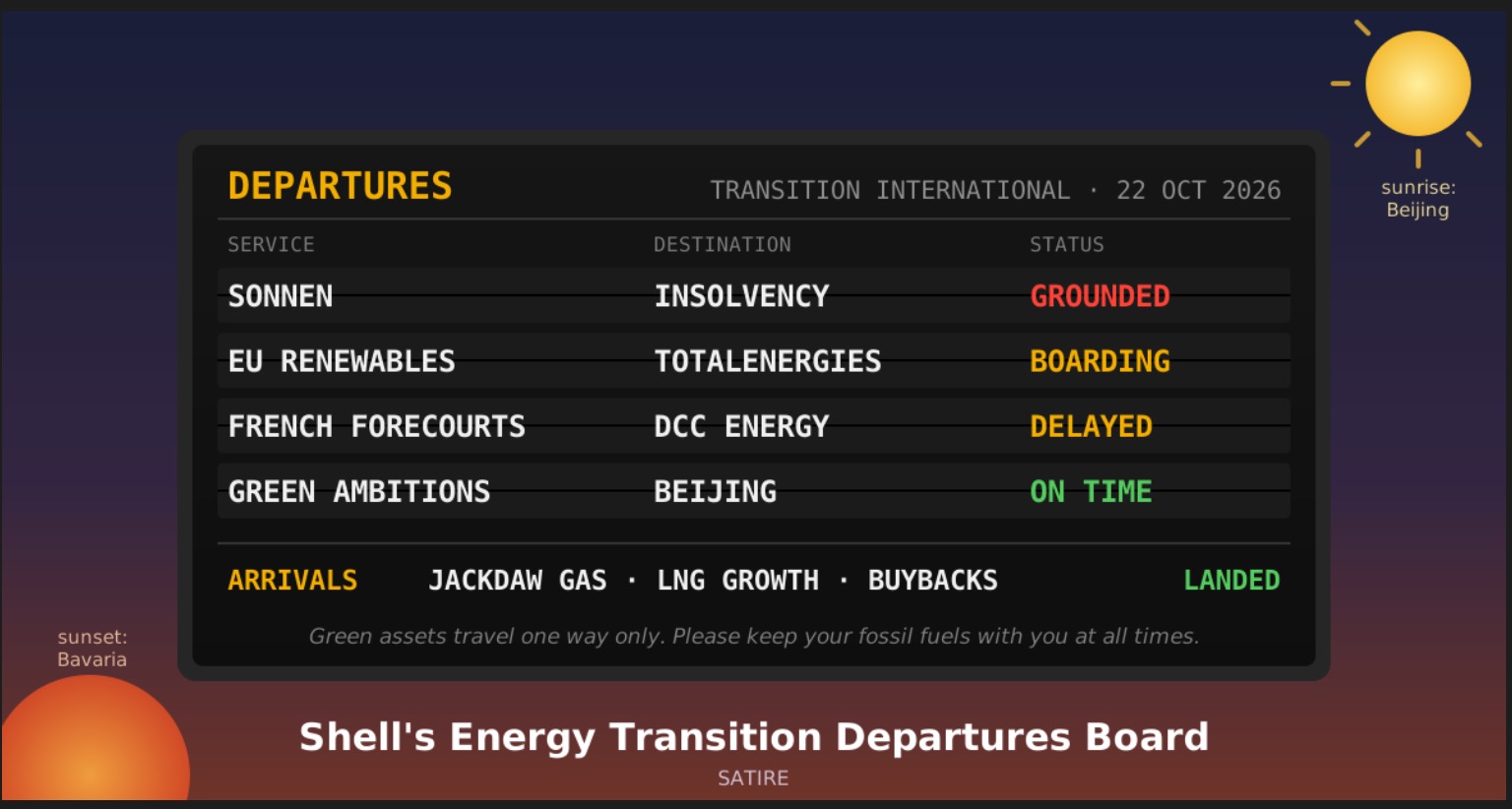 Shell has not stopped believing in the energy transition. It simply believes the transition should happen somewhere else, to someone else, and ideally on someone else’s balance sheet.
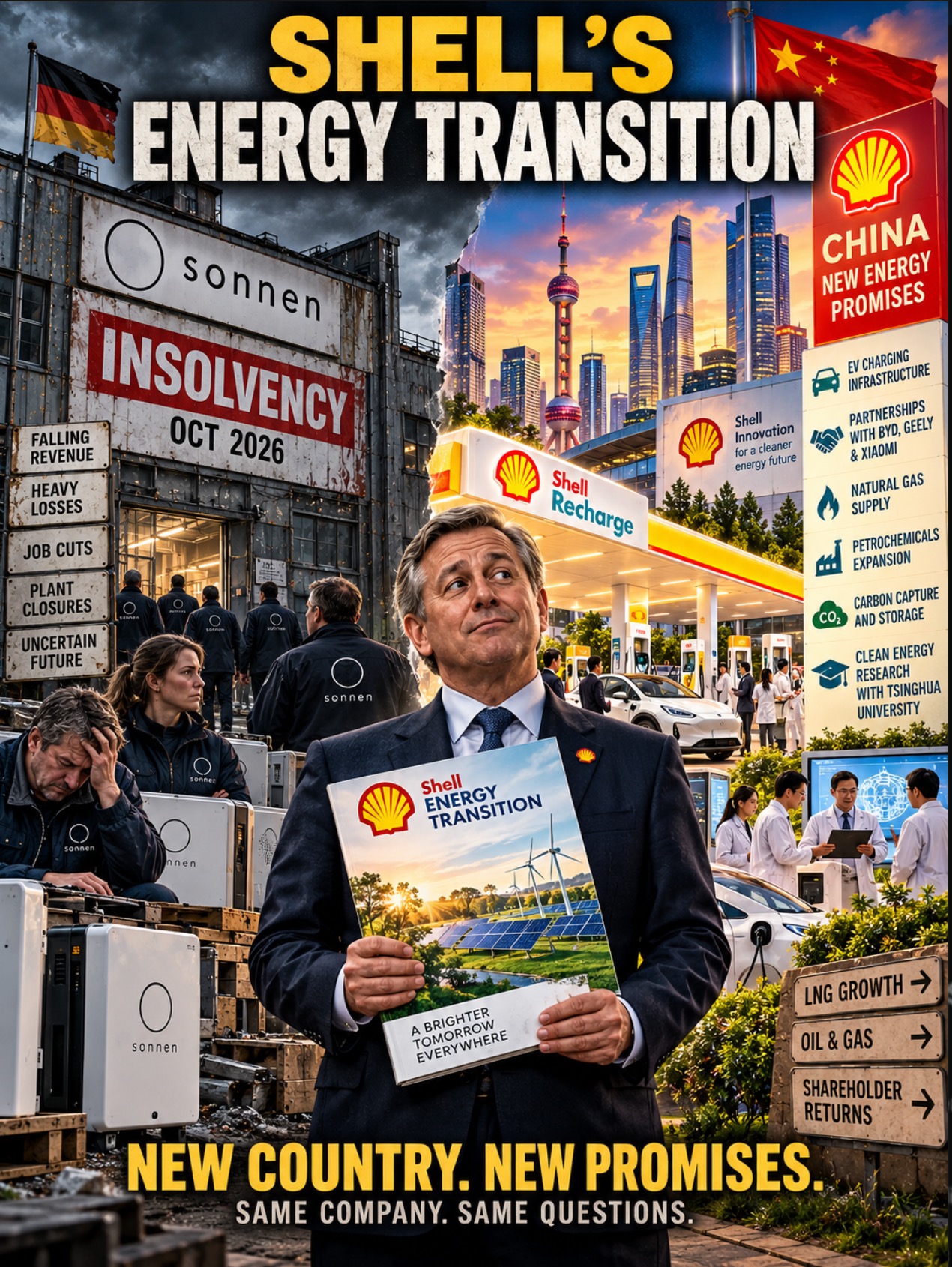 China gets the promises, Germany gets the insolvency proceedings, and Shell gets to explain why both developments are entirely consistent with its energy-transition strategy.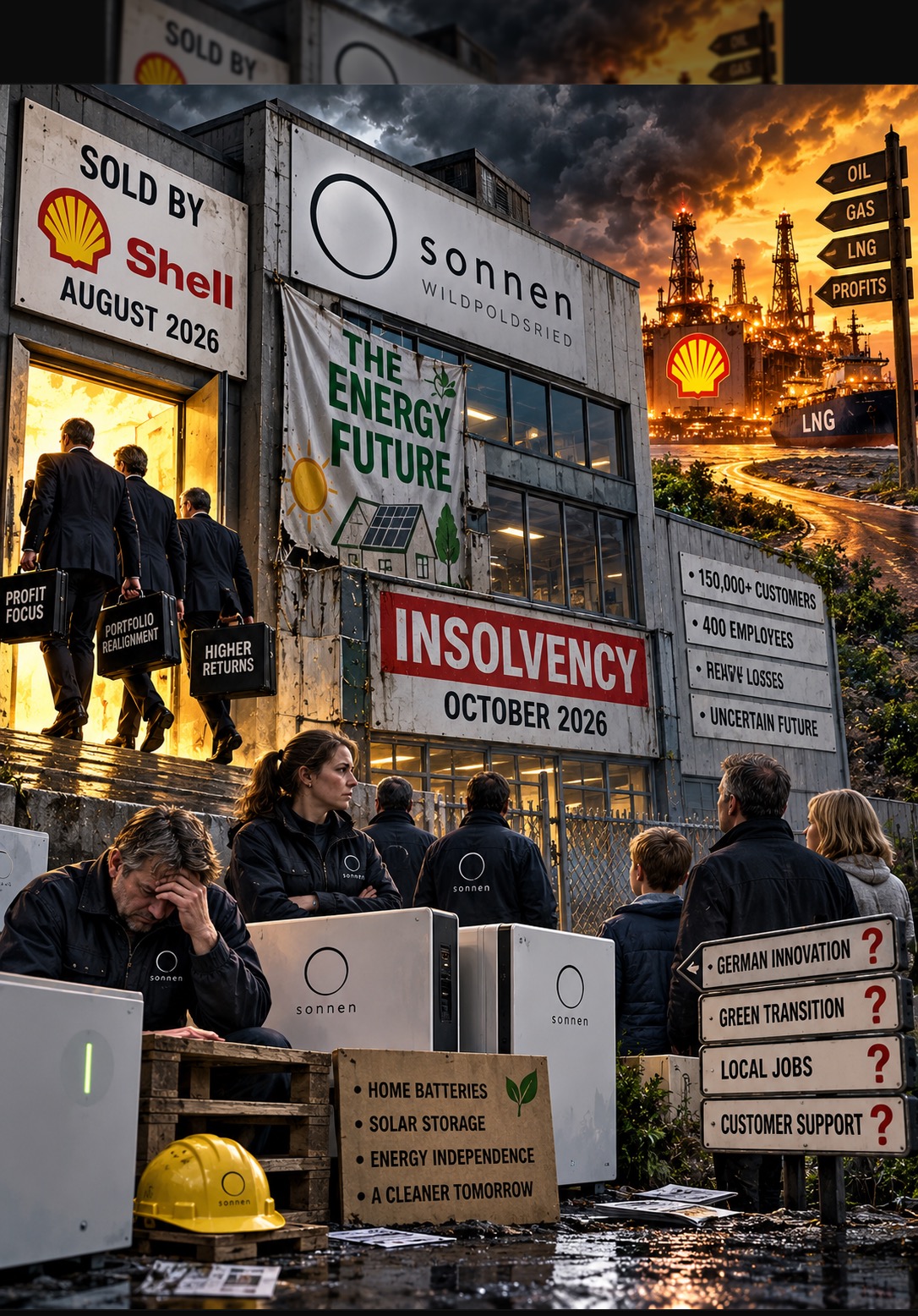
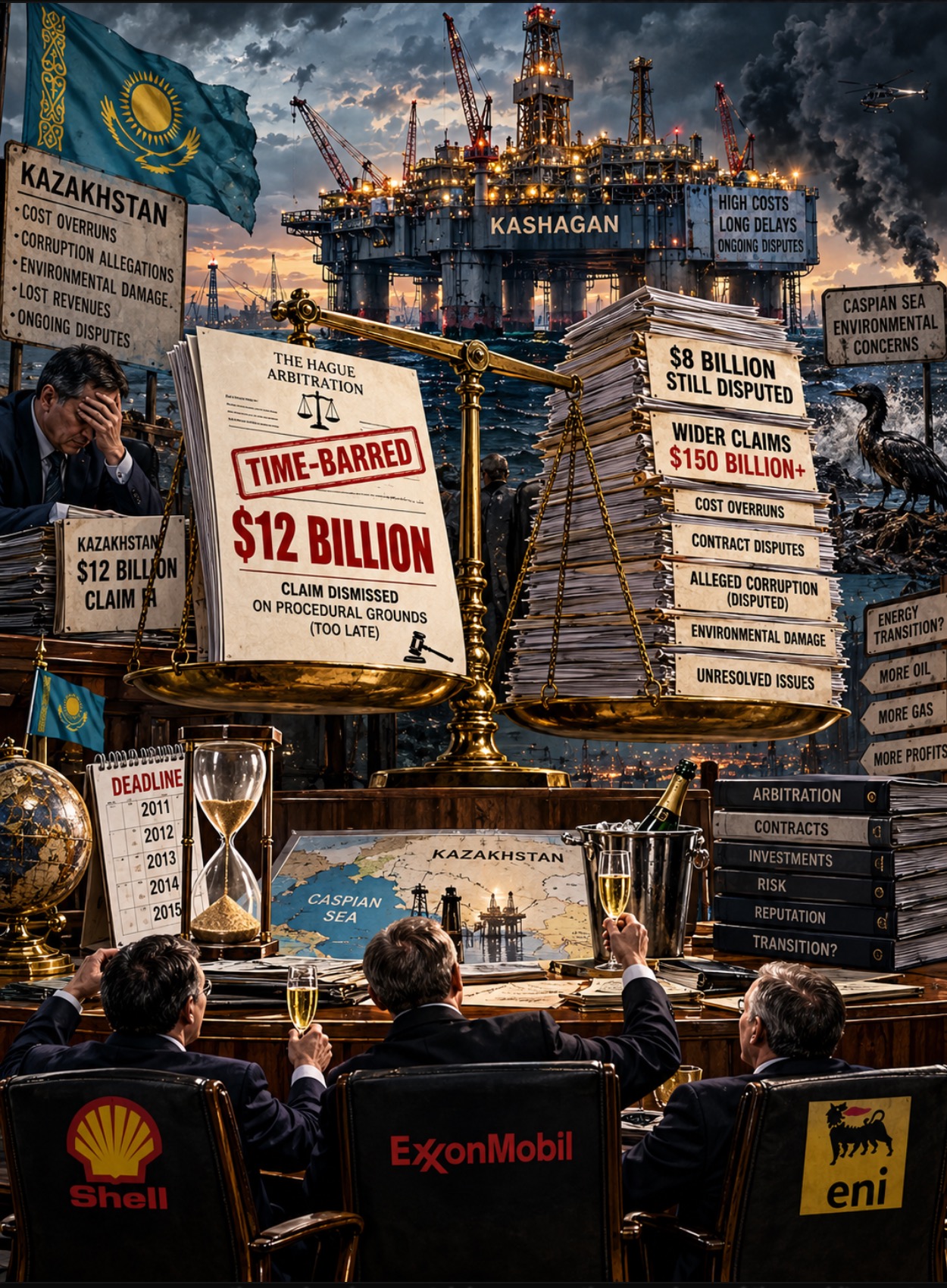 The oil giants have apparently escaped a $12 billion claim because Kazakhstan was too late bringing it. But the wider Kashagan dispute is far from settled, and the embarrassing questions about cost overruns, alleged corruption, environmental damage and corporate accountability are not going away.


 Editorial illustration accompanying a review of Shell-related U.S. and Australian court records.